Servings
6 ServingsPrep time
15 MinutesCooking Time
35 MinutesCalories
--- KcalThis warming one-pot stew delivers the depth and comfort of a long-simmered meal in a fraction of the time.
Ingredients
- 2 tbsp olive oil, plus extra to serve
- 500g beef mince
- sea salt and cracked black pepper, to season
- 1 brown onion
- 4 cloves garlic
- 2 x 400g cans chopped tomato
- 1g dried oregano
- 10 basil leaves, plus extra to serve
- 400g jar tomato passata
- 250g dried lasagna sheets
- 100g grated parmesan
- 250g smooth ricotta
Directions
Cook the beef
1.Heat the oil in a large heavy based frying pan with a lid, over medium-high heat. Break the beef up into small pieces and add to the pan, season with salt and leave to cook for 8-10 minutes, without stirring. 2.Once it starts to brown, start moving it around a little bit with the wooden spoon and breaking it up even further. Continue cooking until browned all over. 3.Once it’s nice and brown, remove some of the excess fat in the pan. To do this, just push your beef to one side of the pan, tip the pan slightly so the fat piles in one part and spoon it out into a small bowl (you can use the excess later if you need more moisture or put it in the fridge and use next time you’re cooking a steak). Just leave about 1 tablespoon in the pan.
Cook the base
- Dice the brown onion and garlic cloves. Add the onions to the pan, season with some salt and cook for 2-3 minutes, until the onions soften.
- Stir in the garlic, continue cooking for 2 minutes. Add the tinned tomatoes, then fill the cans ¼ full with water and add to the pan to get the rest of the tomatoes out.
- Add the oregano, basil leaves, passata and season with salt and pepper. Bring to a simmer.
Add the pasta and finish
- Break the pasta sheets into smaller pieces (try to keep them as rectangles), roughly 4 per sheet, and stick into the sauce, standing upright.
- Cover and reduce the heat to low. Simmer gently for 15 minutes, stirring gently at the halfway mark (around 7 minutes). Uncover and check if pasta is softened, then sprinkle over the parmesan cheese and fold through. At this point, if you think the sauce is too thick, just add a little bit of water and stir through.
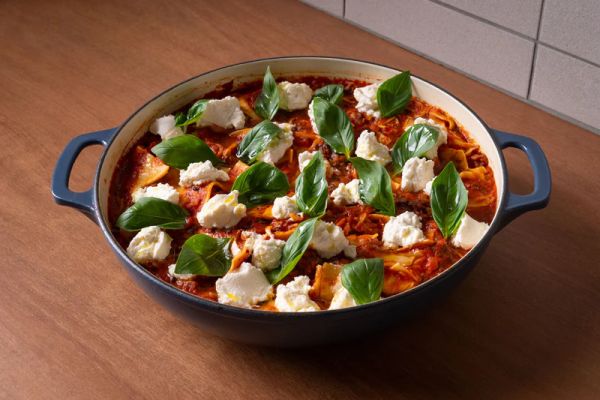
- Dollop the ricotta over the pasta in small spoonfuls. Garnish with basil leaves and a drizzle of olive oil. Serve it from the pot and enjoy!
Chef Tips
- Don’t rush browning the beef: Let the mince sit in the pan without stirring for a good 8 to 10 minutes. Most people break it up too early and end up with grey, steamed meat instead of a properly browned bolognese. That crust is where the flavour comes from. Once it’s golden on the bottom, then you can start breaking it apart.
- Keep the fat: After the beef is cooked, there will be plenty of fat in the pan. You want to remove most of this (only keeping about 1 tbsp) by spooning out the excess into a small bowl. This is beef tallow, so keep this in the fridge and use it to cook your steak in next time.
- Keep the sauce loose: The dried pasta will absorb a lot of liquid as it cooks, so don’t let the sauce get too thick before adding the sheets. Keep a cup of water nearby. If it looks dry at any point, add a splash and stir through.
Notes:
- Beef mince: Use mince with around 20% fat content. Leaner mince won’t brown as well and the sauce will lack depth. You could also use half beef and half pork which will give you a lighter, more traditional bolognese flavour. The pork adds a natural sweetness that works really well in this dish.
- Dried lasagne sheets: Use dried, not fresh for this recipe. Fresh lasagne sheets will overcook and turn to mush. The dried sheets absorb the sauce as they cook, which is exactly what you want. Break them into rough rectangles so they stand upright in the pan.
- Parmesan: Grate it yourself rather than buying pre-grated. It melts into the sauce much more cleanly and tastes noticeably better.
- Smooth ricotta: Make sure you buy smooth ricotta, not the grainy variety. You want it to dollop cleanly over the top and melt slightly from the heat of the dish. It’s used in place of bechamel here for a lighter, no-cook alternative.